Analyzing Google’s Disco new Browser and the Shift to Generative Interfaces

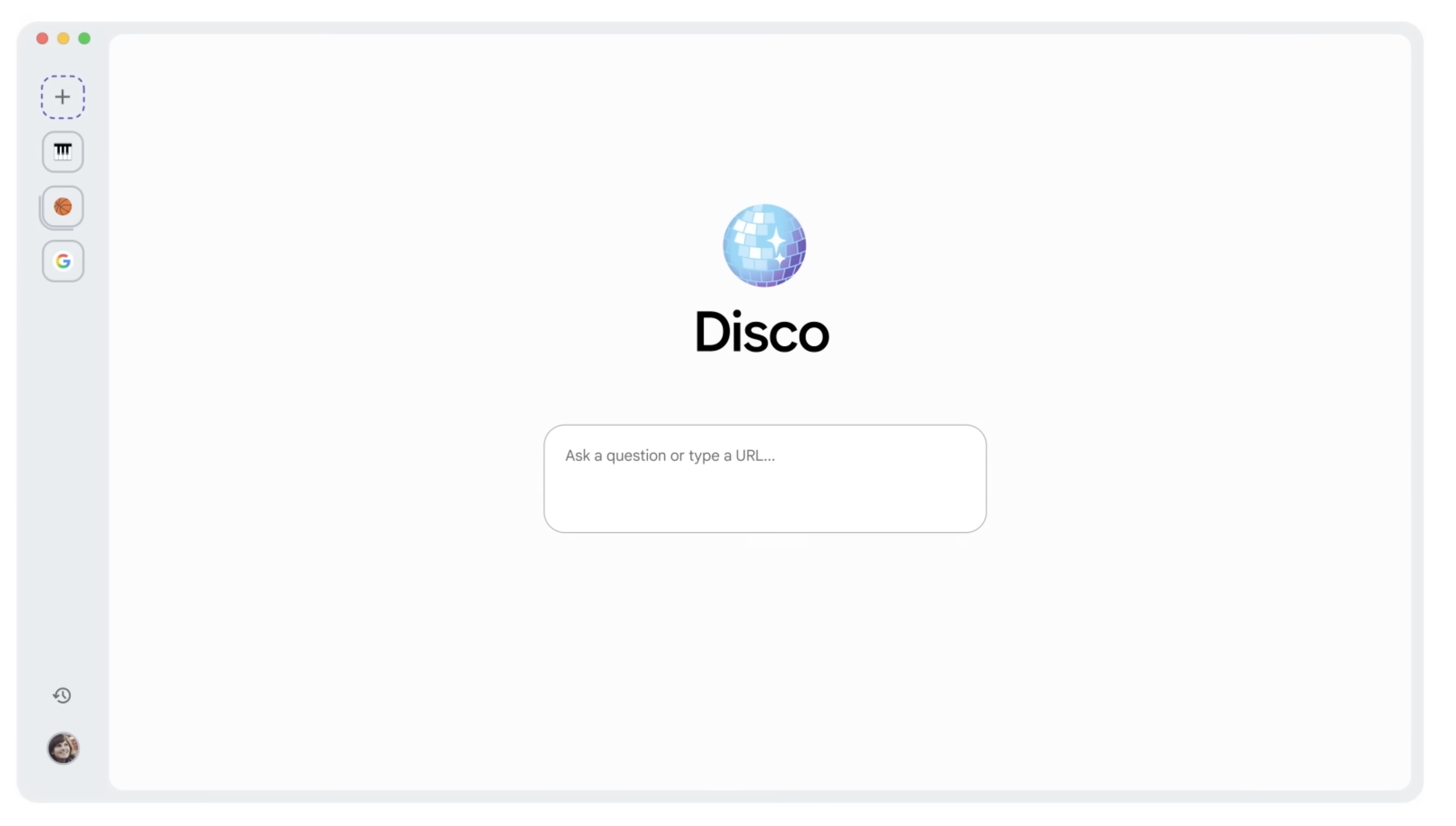
For the last 30 years, the web browser has been a passive window: it retrieves HTML from a server and renders it. You, the user, do the work of connecting the dots—opening five tabs to compare flight prices, copying addresses into maps, and pasting data into spreadsheets.
Google’s new experimental project, Disco, attempts to kill this workflow.
By positioning a generative AI layer directly over the browser engine, Disco stops being a passive window and becomes an active synthesizer. It doesn't just read pages; it builds new software on top of them. Below, we analyze the technical architecture, the user interface paradigm shift, and the inevitable trade-offs of this "post-browser" reality.
GenTabs: Converting Context into Code
The flagship feature of Disco is GenTabs (Generative Tabs). In a traditional browser, a "tab" is an isolated container for a single URL. In Disco, a GenTab is a dynamic, ephemeral web application generated by ingesting the context of your browsing session.

How it works:
- Ingestion: You open multiple tabs relevant to a task (e.g., a hotel booking site, a Google Map of Tokyo, and a "Top 10 Ramen Shops" blog).
- Context Window Processing: Disco feeds the textual and visual DOM data from these active tabs into a large context window (likely powered by a Gemini variant).
- App Generation: The model identifies the intent ("Plan a trip to Tokyo") and generates a single, unified dashboard. It extracts the hotel prices, plots the ramen shops on the map, and creates a schedule—all in one new interface.

Technically, this flips the web model on its head. Instead of the user navigating to multiple destinations, the browser pulls data from those destinations to construct a local, purpose-built application.

The Mechanics of Generative UI (GenUI)
The "magic" behind GenTabs is a concept called Generative UI. This is arguably the most significant shift in frontend engineering since the introduction of React.
In standard development, a UI is deterministic. A developer hardcodes a button, a sidebar, or a modal. Every user sees the same interface. GenUI, however, renders components probabilistically based on user intent.
The "Photoshop Sidebar" Analogy
Consider professional software like Adobe Photoshop. It has hundreds of tools, most of which a beginner never touches.
- Static UI: Shows every tool to every user, resulting in a steep learning curve.
- Generative UI: Analyses the user's skill level and current goal. If you are a beginner trying to crop an image, GenUI generates a sidebar with only a crop tool and a brightness slider. As you attempt more complex tasks, the UI dynamically re-renders to expose advanced vector tools.
For developers, this suggests a future where we write "UI definitions" and "intent constraints" rather than hard-coded views. The AI acts as the final renderer, deciding how to present the data to the specific user at that specific moment.
Integration and Infrastructure
Disco’s strength is not just its AI model, but its data pipeline. Because it sits within the Google ecosystem, it has privileged access to the structured data that powers your life.
A third-party AI browser (like Arc or a startup wrapper) has to "scrape" your calendar or assume context. Disco likely accesses these via internal APIs:
- Google Drive: It can pull a PDF itinerary.
- Google Calendar: It checks for scheduling conflicts.
- Google Maps: It calculates real-time transit data between locations found on a blog.
This integration creates a "moat." The utility of GenTabs scales with the amount of data the system can access. For a user deep in the Google Workspace ecosystem, Disco offers a level of interoperability that isolated LLMs cannot match.
The Reality Check: Latency, Determinism, and Control
While compelling, the move to a Generative UI browser introduces significant technical and UX risks that developers and power users must consider.
1. The Death of Muscle Memory
Software proficiency relies on muscle memory—knowing instinctively that the "Save" button is in the top left. If the UI changes every time you open the app because the AI "thought it would be better," efficiency collapses. Usefulness requires predictability, and GenUI is inherently variable.
2. The Latency Cost
Rendering a static HTML page takes milliseconds. "Thinking" of a layout, generating the code, and then rendering it takes seconds. For a browser—a tool defined by speed—any added friction is often fatal to adoption.
3. Privacy and Data Ingestion
For GenTabs to work, the browser must constantly "read" every open tab. This raises massive privacy concerns. While Google already indexes the web, having a browser that actively digests your private, unindexed sessions (e.g., internal corporate dashboards, private emails) to generate apps creates a new attack surface for data leakage.
Conclusion
Google Disco is more than a new browser; it is a proposal for a Generative OS. It suggests a future where the line between "content" and "application" dissolves.
If successful, it changes the role of a web developer. We may stop building "websites" meant to be viewed and start building "APIs" meant to be consumed by user-side AI agents.
What to do next: If you are a developer or power user, join the Google Labs waitlist for Disco. Even if you don't use it as your daily driver, testing GenTabs will give you the earliest insight into how AI will reshape the consumption of your own web products.

MindPlix is an innovative online hub for AI technology service providers, serving as a platform where AI professionals and newcomers to the field can connect and collaborate. Our mission is to empower individuals and businesses by leveraging the power of AI to automate and optimize processes, expand capabilities, and reduce costs associated with specialized professionals.
© 2024 Mindplix. All rights reserved. A product by Axisway