DeepSeek 3.2: Security Audit and Trust Architecture in Open LLMs

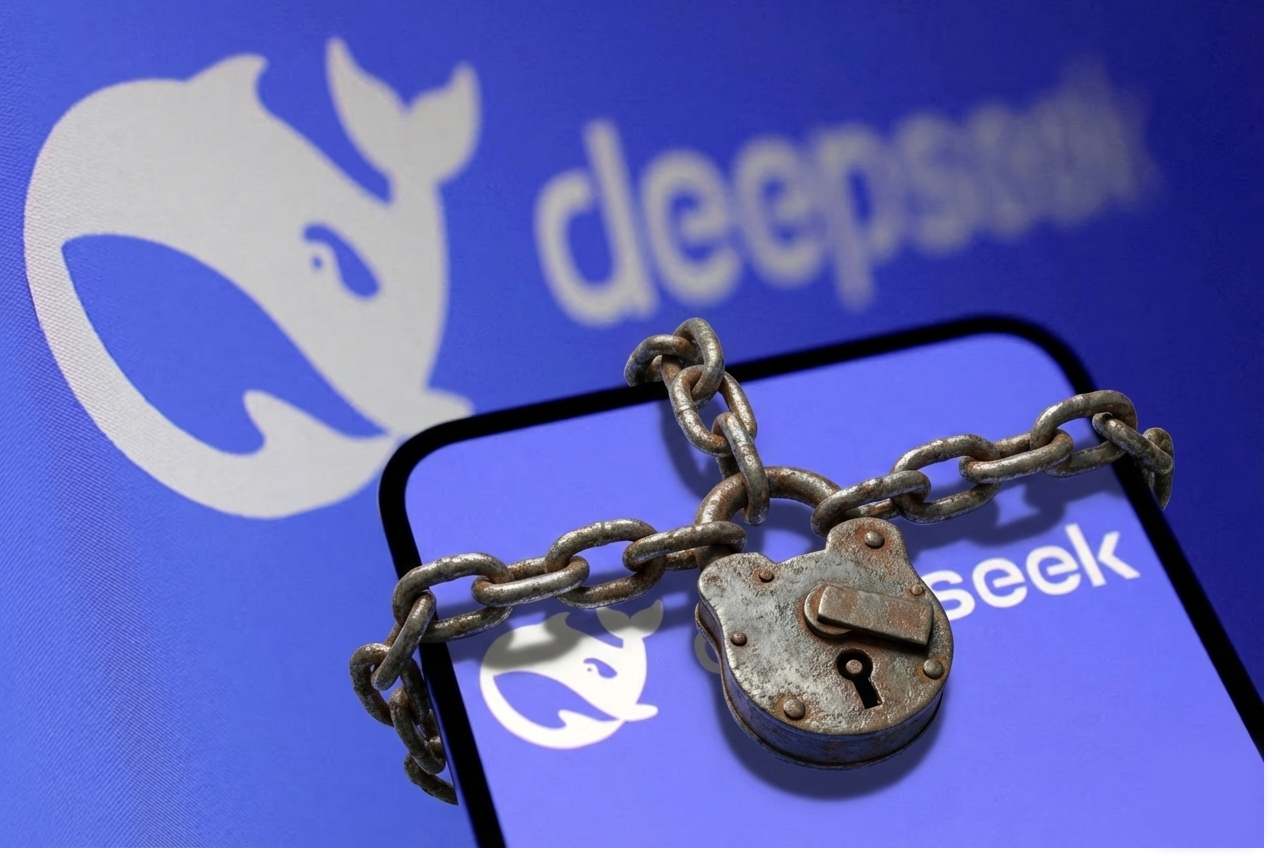
The Origin Dilemma: Efficiency vs. Geopolitics
DeepSeek 3.2 has rapidly established itself as one of the most capable and efficient models currently on the market. It performs well. It costs little to run. However, technical merit often takes a backseat to geopolitical anxiety. The model was created by a Chinese company. Given the complex history regarding cyber warfare and espionage accusations between major global powers, a natural question arises for any CTO or developer: Can we actually trust this model?
The fear is understandable. Security is paramount. But in the world of open-source software, trust should be based on architectural verification, not just brand reputation. To understand the risk, we have to separate the creator from the code.
Anatomy of Open Weights: Code Transparency
The most critical distinction to make is that DeepSeek 3.2 is an open-weights model. It is released under the MIT open-source license.
When you use a closed model (like GPT-4 or Gemini via API), you are sending data into a "black box" owned by a corporation. You trust them not to peek. With DeepSeek 3.2, the dynamic is different. The public cannot see the internal meetings or servers of DeepSeek the company, but the model itself is fully transparent.
Think of the model not as a remote brain, but as a giant file. A very large, static file. Technically, it is comparable to a massive Excel spreadsheet filled with numbers (weights). By itself, this file is inert. It cannot "phone home." It cannot steal data. It is simply a collection of mathematical parameters waiting to be calculated. Because these weights are open, they are fully auditable by the global security community.
Attack Vectors and the Inference Provider
If the model is just a static file, how do we use it? You need an Inference Provider.
Definition: Inference Provider The entity that supplies the hardware (GPUs) and software infrastructure to actually run the model. This could be a cloud service (like AWS, Azure, or Together AI) or your own local server.
This is where the real security architecture is built. Choosing the inference provider is significantly more important than the model itself.
The market for inference is wide open. If you are a US-based company handling sensitive data, you are not forced to send that data to China to use DeepSeek. You can download the weights and run them on a provider located in Northern Virginia, under US law, on US infrastructure.
By decoupling the logic (the model) from the execution (the provider), you control the data flow. You can choose a legal system compatible with your compliance requirements. The original creators of the model never see your prompts.
Instrumental Verification: Stress Tests with Garak
A skeptic might ask: "What if they snuck something into the weights? A 'sleeper agent' trigger that causes the model to behave maliciously under specific circumstances?"
This is a valid concern in supply chain security. Fortunately, we don't have to rely on blind faith. We have testing frameworks. One of the industry standards for this is Garak.
Garak (Generative AI Red-teaming & Assessment Kit) is essentially a vulnerability scanner for Large Language Models (LLMs). It ruthlessly probes the model to see if it can be tricked into generating malware, revealing private data, or behaving in unexpected ways.
If you are unsure about the model's integrity, you run it through a full suite of Garak security tests. This provides empirical data. It moves us from "I hope this is safe" to "We have run extensive diagnostics and the behavior is within nominal parameters."
Strategy: Defense in Depth
So, can you use this to get real work done? Yes. But security is not a binary switch; it is a spectrum. Good systems rely on Defense in Depth—layering multiple security controls.
We can categorize usage based on risk profiles:
- Efficiency Workloads: For tasks where cost is the main driver (e.g., summarizing public news articles), standard security precautions and a reputable cloud inference provider are sufficient.
- High Assurance Workloads: For regulated industries (finance, healthcare), we take it to the next level.
For the highest security needs, you can run open-weights models on air-gapped infrastructure.
Definition: Air-Gapped A computer or network that is physically isolated from unsecured networks, such as the public internet. There is no physical wire or Wi-Fi connection linking the system to the outside world.
If you run DeepSeek on an air-gapped server using only open-source software, the risk of data exfiltration drops to near zero. Even if the model wanted to send data somewhere, the physics of the network would prevent it.
Final Verdict: Risk Management
Ultimately, it comes down to using the right tool for the job.
DeepSeek 3.2 offers a trade-off: exceptional performance per dollar, with the baggage of geopolitical origin. By understanding the technical reality—that the model is just weights, and the execution is in your control—you can mitigate the risks. Scope your security model to your actual threat profile. Verify with tools like Garak. Isolate the infrastructure.
Trust is good. Auditable architecture is better.

MindPlix is an innovative online hub for AI technology service providers, serving as a platform where AI professionals and newcomers to the field can connect and collaborate. Our mission is to empower individuals and businesses by leveraging the power of AI to automate and optimize processes, expand capabilities, and reduce costs associated with specialized professionals.
© 2024 Mindplix. All rights reserved. A product by Axisway